


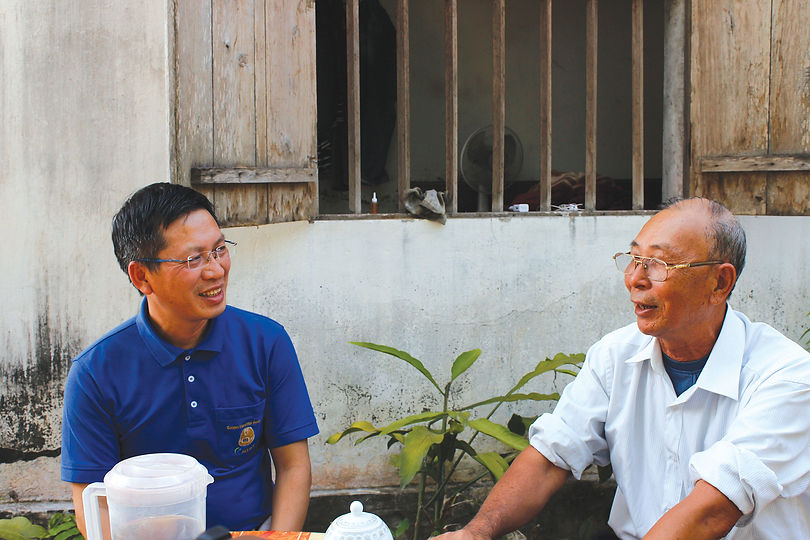
Stakeholder Viewpoint
My name is Bang Minh Quang, and I’ve lived in this village for more than 60 years. I’ve seen many changes happen to the lives of my villagers since AES-VCM came and built the Mong Duong II Power Plant.
When AES-VCM came, a lot of changes happened to my villagers. The compensation from the relocation provided our farmers with capital to improve their harvest. Men and women were provided with opportunities to go to vocational and agricultural skill training courses so that they have better chances to find permanent jobs. Students who dropped out of school can get high school education and meet the minimum requirement for employment right at the Cultural House of the village with no cost. In 2017, the company donated 20 life vests and boat fees to 20 local students who are living on an island to help them get to school.


Only AES-VCM organizes this kind of assistance. They provide us with better infrastructure and help build village roads. They invested in improving the public medical station that offers basic health services in our commune. We have model gardens of native fruit-bearing trees such as orange and pomelo that the villagers can sell for extra income. These trees painted a greener and livelier landscape for the village. The seedlings were provided by AES-VCM. Never before have there been such detailed programs designed with care for the local community, addressing each group of local people—from women to men, from young to old. Everything has been provided. And it is only with AES-VCM. Without their support, we wouldn’t have all of these benefits.
With the power plant operating, good changes are still happening to our village because of their social investments. The residents care about their surroundings and the environment more, they are more responsible when it comes to local activities. The Stakeholder/CSR team updates us frequently and they consult us when it comes to the programs. It is my job and responsibility to communicate these with the residents, and I encourage them to stay in the programs so they can harvest the benefits.
There is very strong relationship between the local village and the people at the power plant, like Mr. Ninh and Ms. Ha, and their CSR projects with AES-VCM always excite me. We ask for AES-VCM to continue in this way into the future.